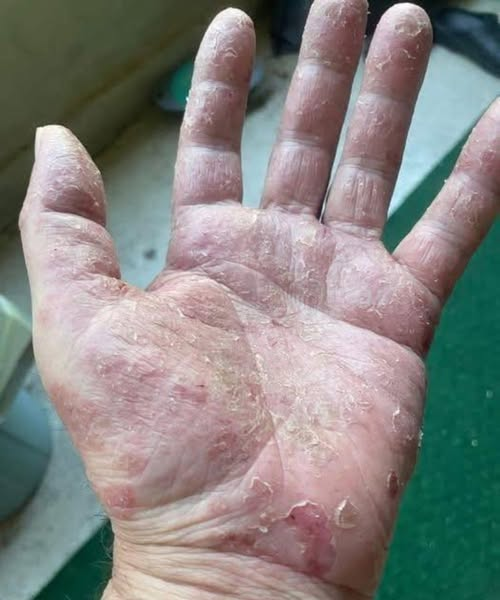
At first glance, many people would assume it’s just dry skin.
A little irritation. Maybe cold weather. Too much handwashing. Something harmless that lotion could easily fix. But when the skin on the hands begins cracking, peeling, blistering, or becoming painfully inflamed like the condition shown in this photo, experts warn it may signal something far more serious happening beneath the surface.
The image reveals severe skin irritation affecting the palm and fingers, with visible peeling, redness, scaling, and damaged skin tissue. While mild dryness is extremely common, skin that begins breaking down to this extent can sometimes point to chronic eczema, allergic reactions, autoimmune conditions, fungal infections, or long-term exposure to harsh chemicals and irritants.
And for many sufferers, the condition becomes far more than cosmetic.
People living with severe hand inflammation often describe constant burning, itching, cracking, and pain that can interfere with everyday activities like writing, cooking, working, or even sleeping. In advanced cases, the skin may split open and bleed, increasing the risk of infection and making simple tasks extremely uncomfortable.
One of the most common causes of hands appearing like this is hand eczema, also called hand dermatitis. This condition occurs when the skin barrier becomes damaged and inflamed, often triggered by repeated irritation or allergies. Frequent handwashing, cleaning products, soaps, disinfectants, workplace chemicals, and even stress can all contribute to flare-ups.
In recent years, dermatologists have reported growing numbers of severe hand eczema cases partly linked to excessive sanitizer use and constant washing habits, especially after global health concerns increased awareness around hygiene. While cleanliness is important, repeated exposure to alcohol-based products and strong detergents can strip the skin of its natural protective oils, leaving it vulnerable to cracking and inflammation.
However, experts warn that not every case is simple eczema.
Sometimes skin conditions affecting the hands may signal deeper health problems. Psoriasis, for example, can create thick, scaly patches that resemble severe dryness but stem from an autoimmune disorder causing the immune system to attack healthy skin cells. Fungal infections may also cause peeling and cracking, especially when left untreated. In other situations, allergic contact dermatitis can occur when the body reacts strongly to metals, fragrances, gloves, or chemicals touching the skin repeatedly over time.
Because several conditions can look similar visually, doctors emphasize the importance of proper medical evaluation rather than self-diagnosing based only on internet photos.
Warning signs that should not be ignored include:
- Cracking or bleeding skin
- Painful blisters
- Swelling or warmth
- Severe itching or burning
- Skin peeling that spreads or worsens
- Symptoms lasting more than a few weeks
- Repeated flare-ups despite moisturizing
Dermatologists say many people delay treatment because they assume the problem is temporary dryness. Unfortunately, untreated inflammation can worsen over time, making the skin barrier weaker and increasing the risk of chronic irritation or infection.
Treatment depends entirely on the underlying cause. Some patients improve through prescription creams and avoiding triggers, while others may require allergy testing, antifungal medication, or more advanced therapies for autoimmune-related skin diseases. In many cases, lifestyle changes also play a major role in recovery.
Doctors commonly recommend using fragrance-free moisturizers, wearing gloves during cleaning tasks, avoiding harsh soaps, and reducing prolonged exposure to chemicals or excessive water whenever possible. Hydration and skin protection are especially important for people working in healthcare, construction, hairdressing, food service, or cleaning industries where hands face repeated irritation daily.
Beyond the physical discomfort, severe skin conditions can also affect emotional well-being. Many people feel embarrassed shaking hands, showing their skin publicly, or explaining visible flare-ups to others. Some sufferers withdraw socially because of pain or insecurity about how their hands look.
That is why experts encourage people not to dismiss visible skin changes as “just dryness” when symptoms become persistent or severe.
Your skin is often one of the body’s earliest warning systems.
And when your hands begin looking like this, they may be trying to tell you something important long before the rest of your body catches up.