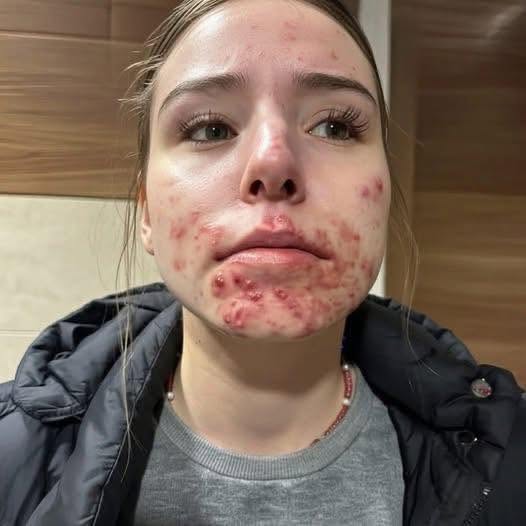
At first glance, the image above may seem shocking. A young woman’s face appears covered in painful, inflamed breakouts, leaving many people wondering what could have caused such a severe skin reaction. While social media often promotes dramatic headlines that promise to reveal a single culprit behind skin problems, the truth is usually much more complicated than it seems.
Acne is one of the most common skin conditions in the world, affecting millions of teenagers and adults alike. It develops when hair follicles become clogged with oil, dead skin cells, and bacteria. While hormones, genetics, stress, and lifestyle factors all play a role, many people continue searching for one simple explanation when their skin suddenly worsens.
One popular claim that frequently circulates online is that sleeping with someone, sharing a pillow, or coming into close contact with another person can directly cause severe acne outbreaks. These claims often spread quickly because they create a sense of mystery and controversy. However, dermatologists generally agree that acne itself is not contagious. You cannot simply “catch” acne from another person the way you might catch a cold or flu.
That said, certain habits associated with sharing personal items can contribute to skin irritation. Pillowcases, towels, makeup brushes, and other objects can collect oils, dirt, sweat, and bacteria over time. If these items are not cleaned regularly, they may aggravate sensitive skin and potentially worsen existing acne. This does not mean they are the sole cause, but they can become one piece of a larger puzzle.
Stress is another major factor that often goes unnoticed. Emotional stress can trigger hormonal changes that increase oil production in the skin. For some individuals, periods of anxiety, lack of sleep, relationship difficulties, or major life changes can coincide with significant acne flare-ups. When stress levels rise, the body may respond in ways that make existing skin conditions more difficult to control.
Hormonal fluctuations are particularly important when discussing severe breakouts. Changes related to puberty, menstruation, pregnancy, certain medications, or underlying medical conditions can dramatically affect the skin. In many cases, people experiencing sudden and widespread acne may actually be dealing with hormonal imbalances rather than anything related to a specific person or encounter.
Diet and lifestyle can also influence skin health. Although research continues to evolve, some studies suggest that highly processed foods, excessive sugar consumption, and certain dairy products may contribute to acne in susceptible individuals. Combined with poor sleep, dehydration, and inadequate skincare routines, these factors can create the perfect environment for breakouts to develop.
For those struggling with severe acne similar to what is shown in the image, seeking professional medical advice is often the best course of action. Dermatologists can identify underlying causes and recommend treatments ranging from topical medications and prescription creams to oral therapies designed for more serious cases. Early intervention can help reduce inflammation and minimize the risk of long-term scarring.
The lesson here is simple: sensational headlines rarely tell the whole story. Severe acne is usually the result of multiple contributing factors rather than one dramatic cause. Understanding the science behind skin health is far more helpful than believing viral myths. With proper care, medical guidance, and patience, many people can successfully manage their acne and regain confidence in their appearance.
SOURCE: CHATGPT