
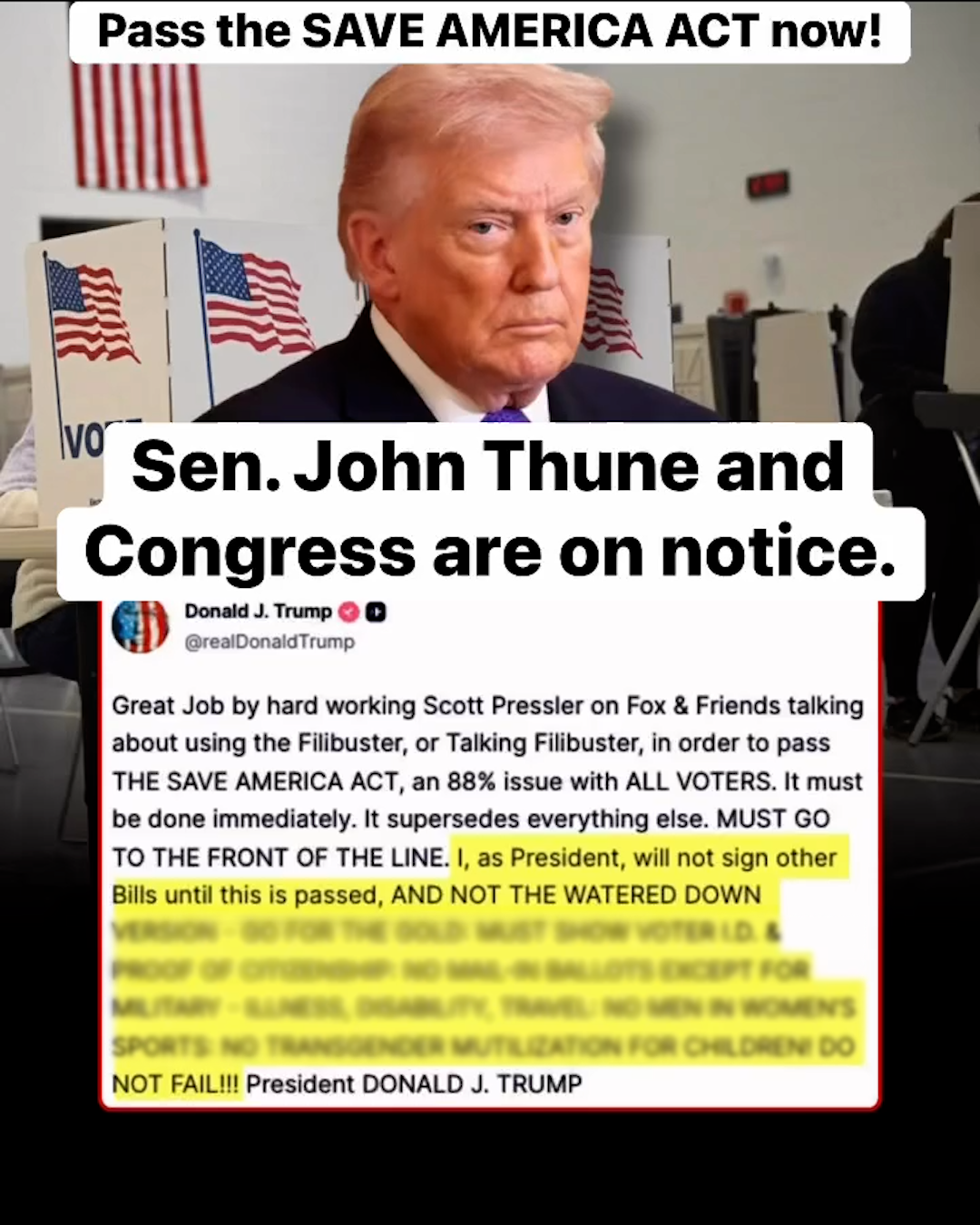
A renewed political debate has emerged in the United States following calls to pass what has been referred to as the “Save America Act.” The proposal has gained attention after a public statement attributed to Donald J. Trump circulated online, urging lawmakers to prioritize the legislation. In the message, he emphasized that the act should move “to the front of the line” in Congress and suggested that no other bills should be signed until it is passed. The statement also mentioned John Thune and members of Congress, signaling pressure on lawmakers to address the issue quickly.
Supporters of the proposal argue that the act focuses on strengthening election security and ensuring confidence in the democratic process. Some of the policies highlighted in the message include requiring voter identification, verifying proof of citizenship, and limiting mail-in ballots to specific circumstances such as military service, illness, disability, or travel. Advocates believe these measures would reduce the risk of fraud and increase public trust in election outcomes. They claim that clear verification procedures could make elections more transparent and consistent across states.
However, critics and policy analysts say many of the proposed ideas are highly controversial and would likely face significant legal and political challenges. Opponents argue that stricter voting requirements could make it harder for certain groups of citizens to participate in elections. Voting rights organizations have long argued that strict identification laws and limits on mail-in voting can disproportionately affect elderly voters, rural communities, and people who may not have easy access to official documentation. As a result, debates over election policy often center on balancing security with accessibility.
Beyond election policies, the circulated message also referenced broader social and cultural issues, including debates about gender policies in sports and medical treatments for minors. These topics have become increasingly prominent in American political discussions over the past few years. Lawmakers from both major parties have introduced bills addressing these issues at the state and federal levels, often sparking strong reactions from advocacy groups, medical professionals, and civil rights organizations. Because of these additional topics, some observers believe the proposed act reflects a wider political agenda rather than a single policy change.
As discussions continue, the future of any such legislation remains uncertain. Passing a major federal law requires agreement between the House of Representatives, the Senate, and the President, a process that can be lengthy and politically complex. While supporters are calling for immediate action, others expect extensive debate before any proposal could move forward. The situation highlights the ongoing tension in U.S. politics over election integrity, voting access, and broader cultural policy issues—topics that are likely to remain central in national conversations for years to come.