
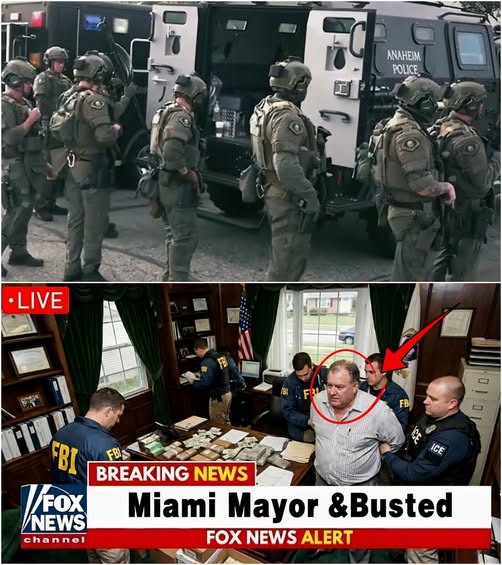
n the early hours of March 12, 2026, a highly coordinated operation unfolded in the heart of Omaha, Nebraska, that would uncover one of the most disturbing human trafficking operations ever exposed in the United States. Federal agents from the FBI and ICE raided multiple motels across the city, simultaneously executing search warrants in what would become a nationwide investigation spanning 14 states. The raid targeted an immigrant family-run motel empire that had been functioning as a front for labor exploitation and sex trafficking.
As tactical lights swept across the motel windows, agents moved swiftly, raiding locations such as the New Victorian Inn, Roadway Inn, and multiple Super 8 motels that had been used as hubs for trafficking. What began as a routine investigation soon revealed a vast network where forced labor and abusive living conditions were the norm, and many of the victims were minors, including 10 children aged as young as 12.
The victims, often immigrants seeking better lives, were lured into exploitative working conditions, with promises of housing and work that quickly turned into modern-day slavery. Their living spaces were described by law enforcement as overcrowded rooms, with unsanitary conditions, and they were often subjected to harsh working hours, performing tasks like laundry, cleaning, and maintenance in the motels, for little or no pay. Some victims were forced into sex work, with their identities and legal status manipulated by the traffickers.
The FBI and ICE had been tipped off by concerned locals who had noticed exhausted workers, suspicious activity, and too many people tied to too few rooms. These concerned citizens reported seeing staff members living in squalid conditions, and others reported strange movements between motels in the area. Investigators were able to track these tips, which led them to the heart of the operation. The scale of the operation was staggering, with 27 victims rescued, and more than $565,000 in cash seized from various safehouses.
Chapter 2: The Motel Network – A Hidden Criminal Empire
As investigators dug deeper into the network, they uncovered a complex system that spanned multiple motels, salons, and illegal businesses throughout the Midwest. The perpetrators ran a network of family-owned motels that appeared entirely legitimate to the public, yet behind the closed doors were horrific crimes being committed. These businesses operated as fronts for both labor trafficking and sex trafficking, and the motels were strategically placed in high-traffic tourist areas to avoid scrutiny.
The motel empire was primarily run by a family connected to several different businesses, including a chiropractic clinic and a salon business. These businesses weren’t just providing services—they were used to launder money and conceal trafficking activity. The owners of the motels, namely Kentumar Shadhuri, Rashmi Ajit Samani, Amit Pradai Shadhuri, and Mahesh Kumar Shadhuri, were all involved in operating the network, with each individual playing a distinct role in facilitating trafficking operations.
Local law enforcement and federal authorities discovered that the traffickers had manipulated immigration systems, exploiting visas and false documents to bring in victims from India and other countries under the pretext of offering jobs in the U.S. The cartel managed to stage fake robberies and fabricate danger to create false victim narratives for the U visa fraud scheme, which allowed traffickers to gain legal status for their victims while keeping them in forced labor. This manipulation of the system further complicated the case and made it harder for authorities to uncover the full scope of the trafficking network.
Chapter 3: The Scale and Reach of the Operation
By the time the FBI and ICE had completely uncovered the network, the operation was far bigger than anyone had anticipated. The funeral home empire was a major part of the network, and the cartel had infiltrated the funeral business to facilitate the transport of drugs as well. Funeral vehicles were used as vehicles for drug smuggling, laundering money, and transporting victims to the motels where they were exploited. The cartel used these funeral vehicles to conceal drugs, laundered money, and even human cargo.
The economic scale of the operation was staggering. $890 million worth of narcotics were moved across the U.S., hidden in various forms, such as coffins, funeral cars, and shipping containers. But what was even more disturbing was how these networks operated in plain sight, using legitimate businesses to shield their illegal activities. The FBI’s financial forensics team traced the funds to find a pattern of money laundering, and how these motel businesses were used as safe havens for illegal transactions. Cash payments, fraudulent insurance claims, and fake identity schemes had created a massive financial empire, one that not only trafficked humans but also profited from fraudulent activities.
Chapter 4: The Unveiling of Mayor Abdi Farah Hassan’s Role
As the investigation continued, one of the most shocking revelations was the involvement of Mayor Abdi Farah Hassan, a Somali-American community leader from Minneapolis. Hassan, who had built his political career around advocating for reform and immigrant rights, was revealed to be deeply involved in the trafficking scheme. His office had acted as a shield for the operation, with Delgado’s network using his political influence to facilitate illegal activity.
Hassan had been part of a corrupt alliance that provided legal cover for Delgado’s drug trafficking operations. The mayor’s office had helped bypass inspections, ensuring the cartel’s drugs were able to move freely through the city. Investigators also uncovered how Hassan’s office had received kickbacks from Delgado’s companies, and how the mayor had awarded city contracts to companies that were later linked to the cartel’s network.
The arrest of Mayor Hassan sent shockwaves through Minneapolis. A politician who had built his reputation on fighting for immigrant rights was now facing charges of conspiracy, bribery, and human trafficking. The case raised uncomfortable questions about corruption within the political system and how easily power and greed could be exploited for criminal enterprises.
Chapter 5: The Arrest Operation – A Nationwide Takedown
The investigation culminated in a sweeping takedown involving 67 arrests across 14 states. Law enforcement raided funeral homes, transport businesses, chiropractic clinics, and even residential properties linked to the cartel.
The FBI’s surveillance team had identified multiple properties involved in the trafficking network, which extended far beyond the motel empire. SWAT teams executed coordinated raids, capturing the perpetrators and recovering millions in drug money and assets. Authorities uncovered refrigerated trucks filled with precursor chemicals for manufacturing fentanyl, as well as hidden cash and bank records connecting the cartel to a larger, international operation.
One of the key elements of the operation was the financial forensics investigation that traced Delgado’s illicit gains back to criminal enterprises in Mexico, where the Sinaloa Cartel was involved in supplying the drugs. The U.S. Justice Department had also identified several high-level individuals involved in money laundering, including real estate agents and unlicensed brokers who helped the cartel secure illegal property transactions.
Chapter 6: The Financial Disruption – The Cartel’s Collapse
With the $890 million scheme exposed, the cartel’s financial structure began to crumble. The FBI had dismantled the financial backbone of the operation, freezing millions in assets and seizing properties linked to the cartel’s drug profits. The insurance fraud network was also cracked, and agents discovered how these fake claims had been used to fund further cartel operations.
The impact was immediate. Insurance companies who had been complicit in covering up the cartel’s activities were now forced to face massive losses due to fraudulent claims. The global drug market, which had been fueled by these operations, was now facing a significant disruption. The cartel’s network, which had flourished under the guise of legitimate businesses, was now broken apart.
Chapter 7: The Aftermath – A Nation Reels
The FBI’s takedown marked a decisive victory in the battle against cartel influence in the U.S. However, the ramifications of the scheme’s exposure would be felt for years to come. In Minneapolis, the arrest of Mayor Hassan marked the end of an era for the local government’s power structure, while Delgado’s arrest left a deep scar on the funeral industry, where families had trusted the businesses for years.
As families who had been exploited began to speak out, witnesses to the cartel’s operations started to provide evidence that further uncovered the depths of organized crime in the U.S. This case, which began with a traffic stop, had now become a nationwide symbol of how organized crime and corruption could infiltrate legitimate industries.
Conclusion: The Need for Vigilance
The $890 million drug scheme had been uncovered, but the need for vigilance and transparency in government and business had never been clearer. Law enforcement had successfully dismantled one of the most sophisticated drug trafficking networks, but the lessons learned from this case would continue to shape future operations.
This takedown wasn’t just about drugs and criminals—it was about the power of corruption and the need for systemic change in law enforcement practices. The FBI had sent a clear message to criminals across the country: no one is above the law, and those who think they can hide behind legitimate businesses will be found and brought to justice.