
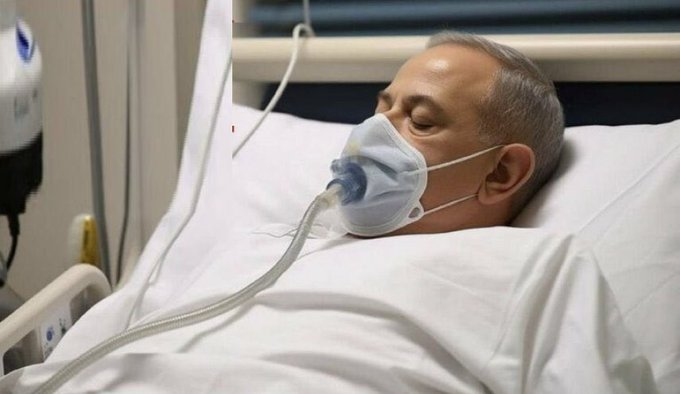
Israeli Prime Minister Benjamin Netanyahu revealed Friday that he recently underwent a significant medical treatment, sharing the news directly with the public through his social media channels. The announcement, while brief in tone, quickly drew global attention, as it touched not only on his personal health but also on the demands of leadership during a period of geopolitical tension.
In his message, Netanyahu emphasized the importance of acting quickly when faced with potential risks. He framed the situation in both personal and national terms, drawing a parallel between his approach to health and his approach to governance. “When I am given timely information about a possible threat, I want to deal with it immediately,” he wrote, signaling a mindset rooted in urgency and control—qualities that have defined much of his political career.
The timing of the revelation is notable. Israel is currently navigating a fragile ceasefire amid ongoing tensions with Iran, and the region remains on edge as negotiations continue. Netanyahu acknowledged that he intentionally delayed the release of his annual medical report for two months, citing concerns that sensitive information could be exploited by adversaries during a critical phase of military and diplomatic activity. According to him, the decision was made to prevent “false propaganda” from spreading during a delicate moment for national security.
Only in the fourth part of his statement did Netanyahu disclose the full nature of the health issue. During a routine medical checkup, doctors discovered a small malignant tumor—less than a centimeter in size—on his prostate. The condition had not spread beyond its original location, allowing for early and targeted treatment. The diagnosis, he noted, is relatively common among men in his age group, especially those over 70.
Following the discovery, Netanyahu underwent what he described as “short treatments,” which were apparently successful in eliminating the tumor completely. He reassured the public that he continued working throughout the process, maintaining his responsibilities as prime minister without interruption. “I had some short treatments done, read a book, and continued working,” he wrote, underscoring both the manageable nature of the condition and his commitment to his duties.
Medical experts often stress that early detection is crucial in cases like this. Prostate cancer, when identified at an early stage, typically has a high survival rate and can often be treated effectively with minimal long-term impact. Netanyahu’s case appears to align with this pattern, as the tumor was detected early and had not metastasized. His announcement may also serve to raise awareness about the importance of routine health screenings, particularly for older men.
Public reaction to the news has been mixed but largely supportive. Many have expressed relief at his recovery, while others have focused on the broader implications of transparency in leadership health disclosures. In democratic systems, the health of national leaders is often considered a matter of public interest, especially when it could affect decision-making during times of crisis.
At 76, Netanyahu remains one of the most prominent and controversial figures in global politics. His leadership style, often characterized by decisiveness and resilience, was reflected in the way he handled this personal challenge. By addressing the issue directly and emphasizing its resolution, he aimed to project stability both domestically and internationally.
“I thank God I won this battle too,” he concluded in his message, framing the experience as another challenge overcome. While the health scare appears to be behind him, the episode highlights the intersection of personal vulnerability and public responsibility—a balance that leaders like Netanyahu must navigate under constant scrutiny.
As Israel continues to face complex geopolitical challenges, Netanyahu’s announcement serves as a reminder that even the most powerful figures are not immune to personal trials. Yet in this case, the outcome appears to be positive, with the prime minister returning to full health and continuing his role at the helm of the nation.