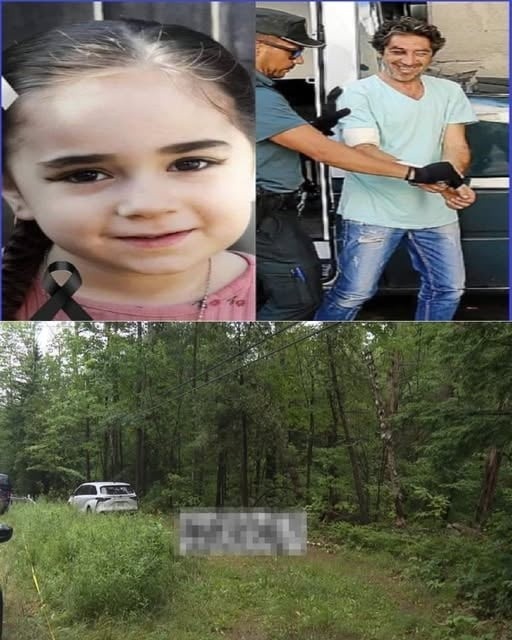
In the spring of 2021, a story began in the sunny Canary Islands that would eventually move an entire nation to tears. While internet rumors and clickbait headlines often try to reinvent the facts for views, the real story of Olivia Gimeno Zimmermann is one of profound tragedy, a father’s ultimate betrayal, and a mother’s enduring love.
The Disappearance in Tenerife
On April 27, 2021, in Tenerife, Spain, six-year-old Olivia and her one-year-old sister, Anna, were picked up by their father, Tomás Gimeno. It was a routine visit, and they were supposed to be returned to their mother, Beatriz Zimmermann, that evening.
However, as the hours passed, the girls did not return. Instead, Beatriz received a series of chilling phone calls and messages. Tomás told her that she would never see him or the girls again, claiming he was going away to start a new life where they could not be found.
A Search Like No Other
While social media often falsely claims the girls were “found in the woods,” the reality was far more complex and required high-tech maritime intervention. For weeks, the Spanish Civil Guard, along with emergency services, conducted an exhaustive search of the island. When evidence suggested Tomás had taken a boat out to sea alone that night, the focus shifted to the Atlantic Ocean.
The search became one of the most sophisticated in maritime history. The Spanish oceanographic vessel Ángeles Alvariño was deployed, equipped with a Liropus 2000 underwater robot capable of searching the seabed at extreme depths. For over 40 days, the crew scanned the jagged, volcanic floor of the ocean.
The Discovery at 1,000 Meters
On June 10, 2021, the search reached a tragic conclusion. At a depth of approximately 1,000 meters (3,200 feet), the underwater robot located two sports bags tied to a heavy anchor.
Inside one of the bags, authorities found the body of little Olivia. The second bag was found empty. The discovery confirmed the world’s worst fears: Tomás Gimeno had not fled to start a new life; he had taken his daughters to the middle of the ocean to ensure they—and he—would never be found. Investigators concluded that the girls had been murdered before being dropped into the sea.
Understanding “Vicarious Violence”
The case of Olivia and Anna became the face of a specific and terrifying type of crime known as vicarious violence (violencia vicaria). This occurs when a parent harms or kills their children not out of a direct grievance with the children themselves, but as a way to inflict the maximum possible psychological pain and lifelong torture upon the other parent.
By taking the girls, Tomás Gimeno aimed to destroy Beatriz Zimmermann’s life without taking it. The sheer cruelty of the act sparked a national conversation in Spain about domestic abuse and the safety of children during custody disputes.
A Legacy of Remembrance
Today, in 2026, the memory of Olivia Gimeno Zimmermann remains a powerful symbol. In Tenerife, a statue of the two sisters stands as a permanent memorial, showing them playing together—a stark contrast to the way their lives were cut short.
The “woods” and “smirking killers” seen in internet clickbait are distractions from a much deeper truth. Olivia’s real story is a reminder of the importance of protecting the most vulnerable and the necessity of facing the reality of domestic tragedies with honesty and respect. Olivia and Anna are remembered not for the way they died, but for the joy they brought to their mother and the world in the few years they were here.