
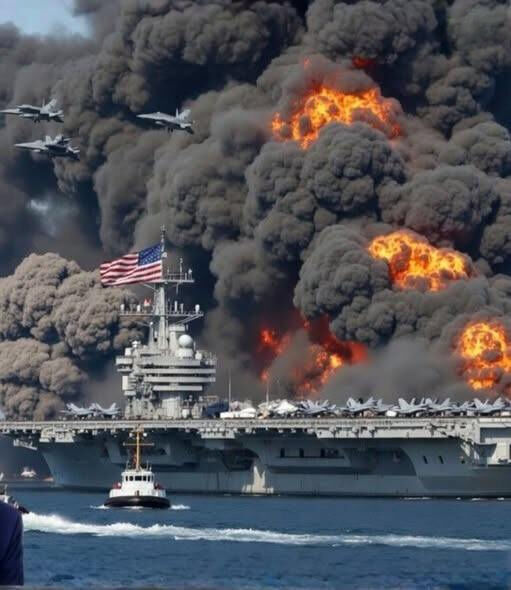
Claims about a military vessel being attacked have circulated widely, but there is currently no credible, confirmed evidence from official government institutions or defense organizations supporting such reports. Ministries of defense, military spokespersons, and international alliances have not publicly confirmed the alleged incident. Organizations such as the World Health Organization and UNESCO have also emphasized the importance of combating misinformation during crises. Their guidance reinforces a basic principle: information should be considered reliable only when supported by credible and authoritative sources. Until such confirmation appears, the claims should be treated as unverified.
Breaking news, especially involving military operations or international conflicts, can create ideal conditions for misinformation. When reliable information is limited, people often turn to anonymous social-media accounts, unofficial commentators, or incomplete reports. High public interest and algorithmic amplification can then cause unverified claims to spread rapidly. A rumor repeated thousands of times can appear convincing even when there is no reliable evidence behind it. This makes it especially important to distinguish between widespread information and verified information.
Military-related incidents require particularly careful verification because premature reports can have serious consequences. Defense organizations generally assess information through multiple channels before making official announcements. They may cross-check operational data, evaluate security concerns, coordinate with allies, and determine what information can safely be released. These procedures can delay confirmation, but such caution is necessary. Without reliable evidence, speculation about the nature of an attack, the weapons involved, casualties, or damage can create a misleading picture of what actually happened.
Unverified military claims can also affect international relations and public confidence. False reports may increase diplomatic tensions, influence financial markets, create unnecessary fear, and weaken trust in credible institutions. International organizations, researchers, and defense analysts therefore have an important responsibility to separate confirmed facts from assumptions. Institutions such as the International Institute for Strategic Studies and the Stockholm International Peace Research Institute generally emphasize evidence and uncertainty when analyzing security developments. Responsible analysis should follow verified information rather than attempt to replace it.
Modern warfare is technologically complex, involving systems such as missiles, electronic warfare, cybersecurity, surveillance, and advanced naval defenses. However, without confirmed details about a particular incident, it is impossible to accurately determine what systems were involved or what strategic consequences might follow. Speculation can easily become mistaken for technical analysis. History also shows that early reports during major breaking-news events are frequently corrected or revised as investigations provide clearer evidence. Patience is therefore an essential part of responsible news consumption.
For now, the alleged attack should be regarded as unconfirmed unless credible authorities provide evidence or reputable independent reporting establishes the event through multiple sources. Readers should monitor official statements from governments and defense agencies, alongside reporting from established international news organizations. Most importantly, people should avoid sharing sensational claims simply because they are widely circulated. In an age of instant information, choosing accuracy over assumptions is essential. Responsible skepticism protects the public from misinformation and helps ensure that sensitive military developments are understood through evidence rather than rumor.